Sunday, May 8, 2011

Elektra 12: The dubious liveness of laptop performance

Even the most perfect reproduction of a work of art is lacking in one element: its presence in time and space, its unique existence at the place where it happens to be.” – Walter Benjamin


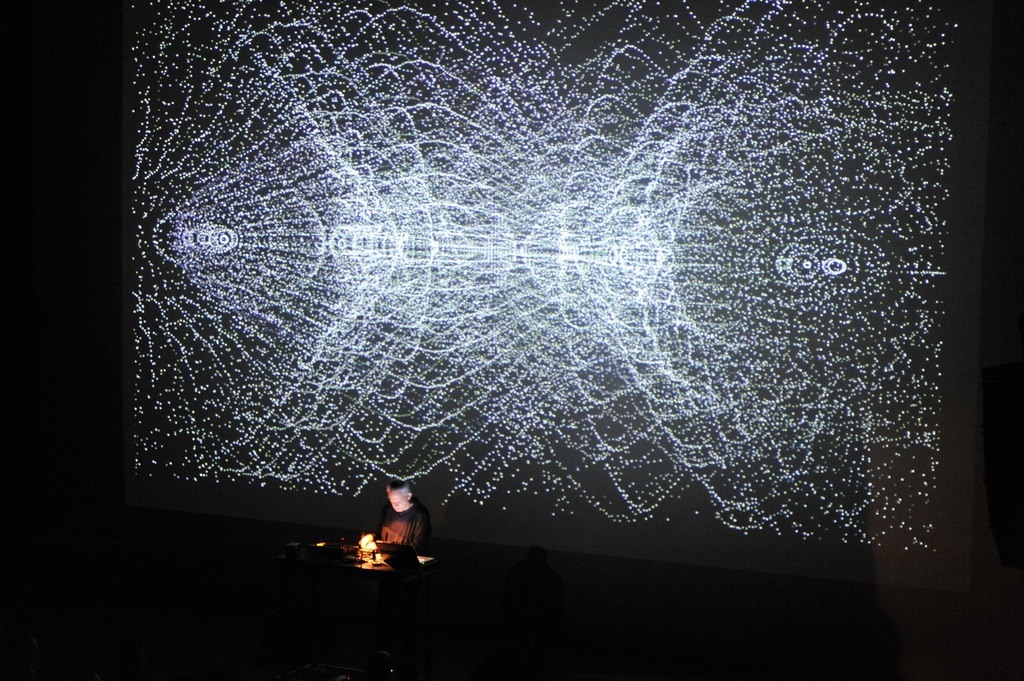
Frank Bretschneider EXP (Raster-notion) Photo courtesy of Elektra


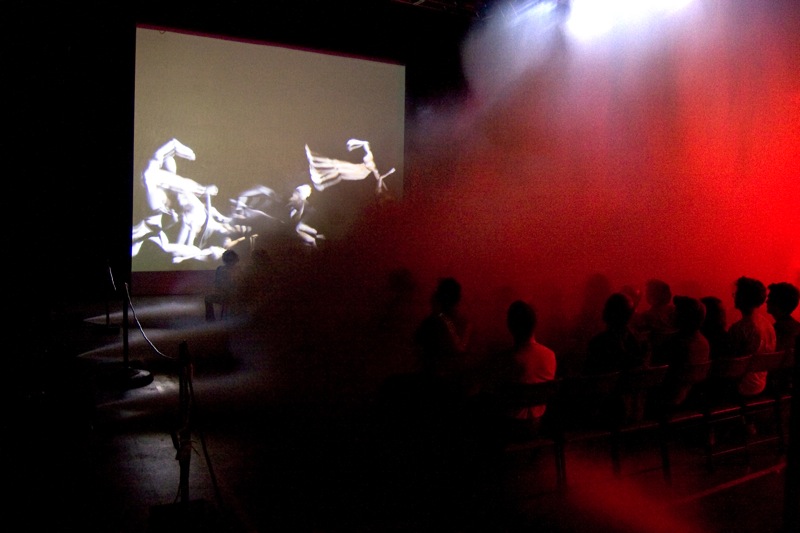
The majority of Elektra 12 performances were characterised by pulsing, glitching, looping, staccato sounds and swirling, strobing, twitching, projected graphic visualizations generated by solo performers on laptops in front of a big screen. I’ll admit up front that this is not my scene and after a while I developed an acute case of ADD (the arduous length of some of them was definitely a contributing factor). My wandering mind kept getting stuck on one question: What value do the artists and audience place on this experience being a live performance?


Well, to begin with, the setup they had at Usine-C was definitely much more impressive than anything you might have at home. Also, the artists were quite possibly adapting, remixing and producing their performances on the fly in response to the (rather stagnant) audience. But you would have needed to have heard previous performances or recordings to know. Oftentimes, the guy (at Elektra they were always guys) behind the laptop would start grooving along to the beat. But we can’t really see his laptop screen or what he is doing. The projected visualizations became the only visual evidence of what we were hearing. With this style of performance there seemed to be no components that, to my mind, could not be recorded and played back: devoid of any claim to being live.
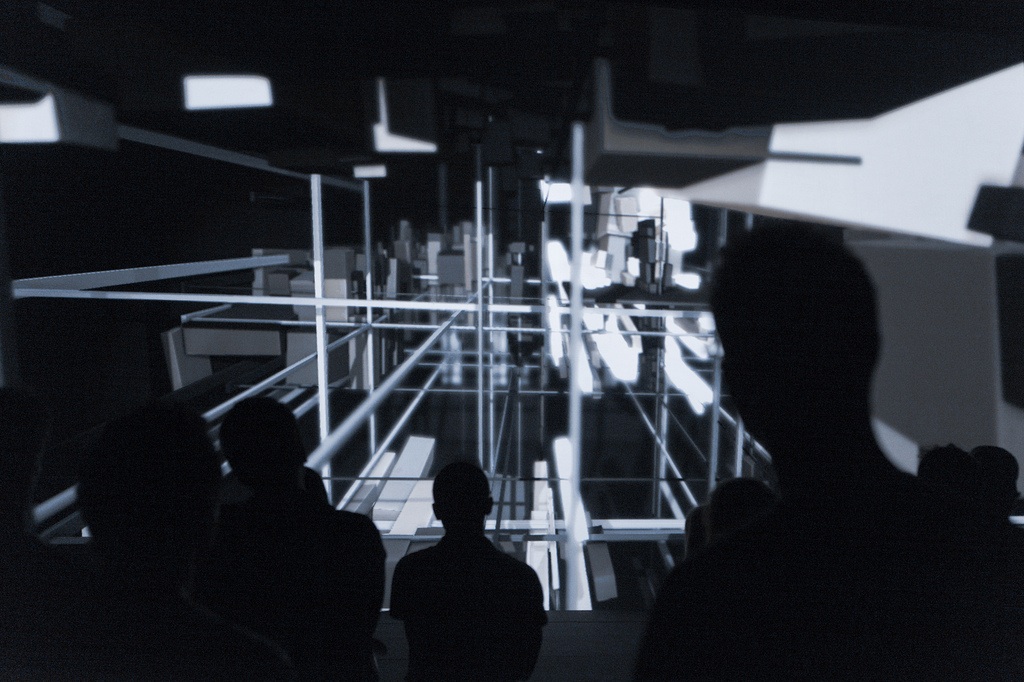


Abstract Birds & Ircam Les objects impossibles Photo courtesy of Elektra


Although, the same protest could be made about any standard pop or rock concert where all the sound and imagery is mediated and processed through technological systems. Since Milli Vanili everyone lip-synchs. The only difference is that with your lip-synching singer there is still a nod to the generative action we are familiar with from traditional musical and physical performance. But the show could very well go on without them. With computer generated AV performances we must release our hold on the aura of the original gesture. The pairing of sound and movement, simulated or not, is absent. There is a correlation between image and sound, but never image, sound and gesture. The only element of live performance that remains is the performers presence in the same space as the audience, controlling the event. It is boiled down liveness.


But why do they do it? Why do they hang onto this last bastion of liveness? Why do they clamber up on stage in front of everyone, especially when it is very difficult for the audience to deduce exactly what they are doing behind their laptop lid? Perhaps it is because live events have high cultural currency. There are social constructs and dichotomies that remain, which position the live above the mediated; the manual above the automated. Being live gives the work a unique status as rare and irreproducible: it confines the work spatially making it only accessible to those present. Being live also renders the work as an open text, giving the artist freedom to respond to the specifics of place and audience. It also releases them from the perfection required of a single recording, and opens up to improvisation and risk taking in the moment. All these cultural constructs are desirable enough to warrant framing presentations of these audiovisual works as live.
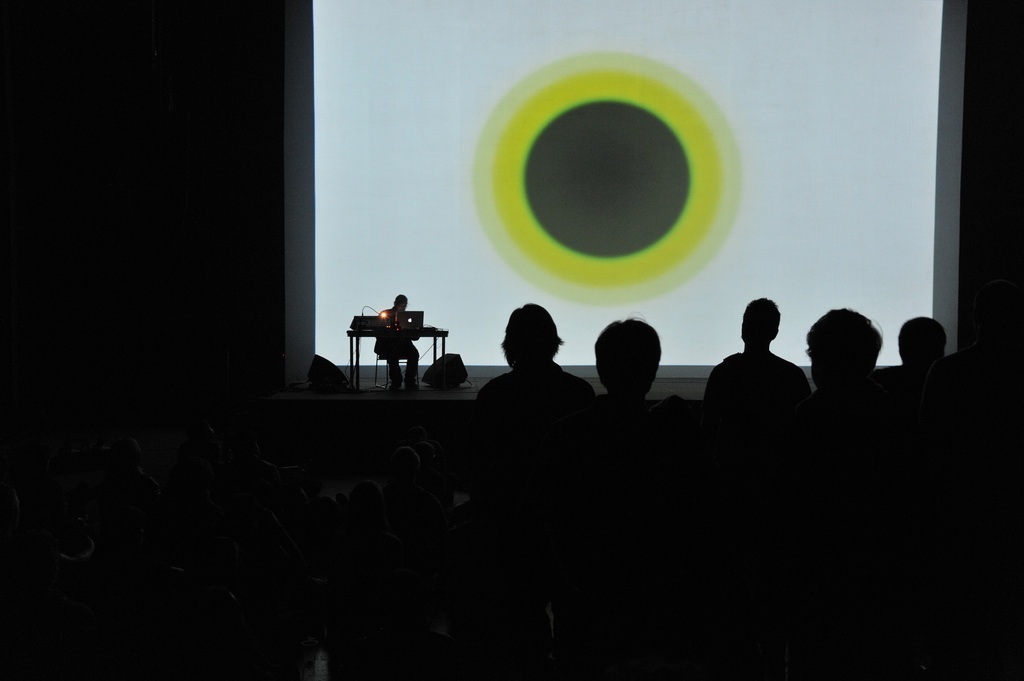


Mark Fell Multistability (Raster-notion) Photo courtesy of Elektra


It is important to acknowledge that what counts culturally as ‘live’ has changed over time in relation to technological development. We can have a ‘live broadcast’, where the audience is only present in the same time, not the same place, as the performer. We even accept the potentially oxymoronic notion of ‘live recordings’: one-off performances that audiences listen to at another time and another place. With all this stretching of the definition of live, what we are left with, critic Philip Auslander suggests, is affective liveness. What we are willing to accept as live—based on cues and demands imbedded in the delivery of the work and it’s social coding—that is what live is.


Maybe what I was sensing was that this type of performance had stretched the definition of live just a little too far for me. And I’m not the only one who has felt this. The organization TOPLAP, an affiliation of artists using live coding to improvise with music and visuals, are all about exposing the process as performance. The first two demands of their manifesto are: “Give us access to the performer’s mind, to the whole human instrument. Obscurantism is dangerous: show us your screens.” Theirs is one possible way to address the question of how to render a claim to liveness in a performance. Even a duo or group of performers can add tension and more explicit communication of live improvisation.
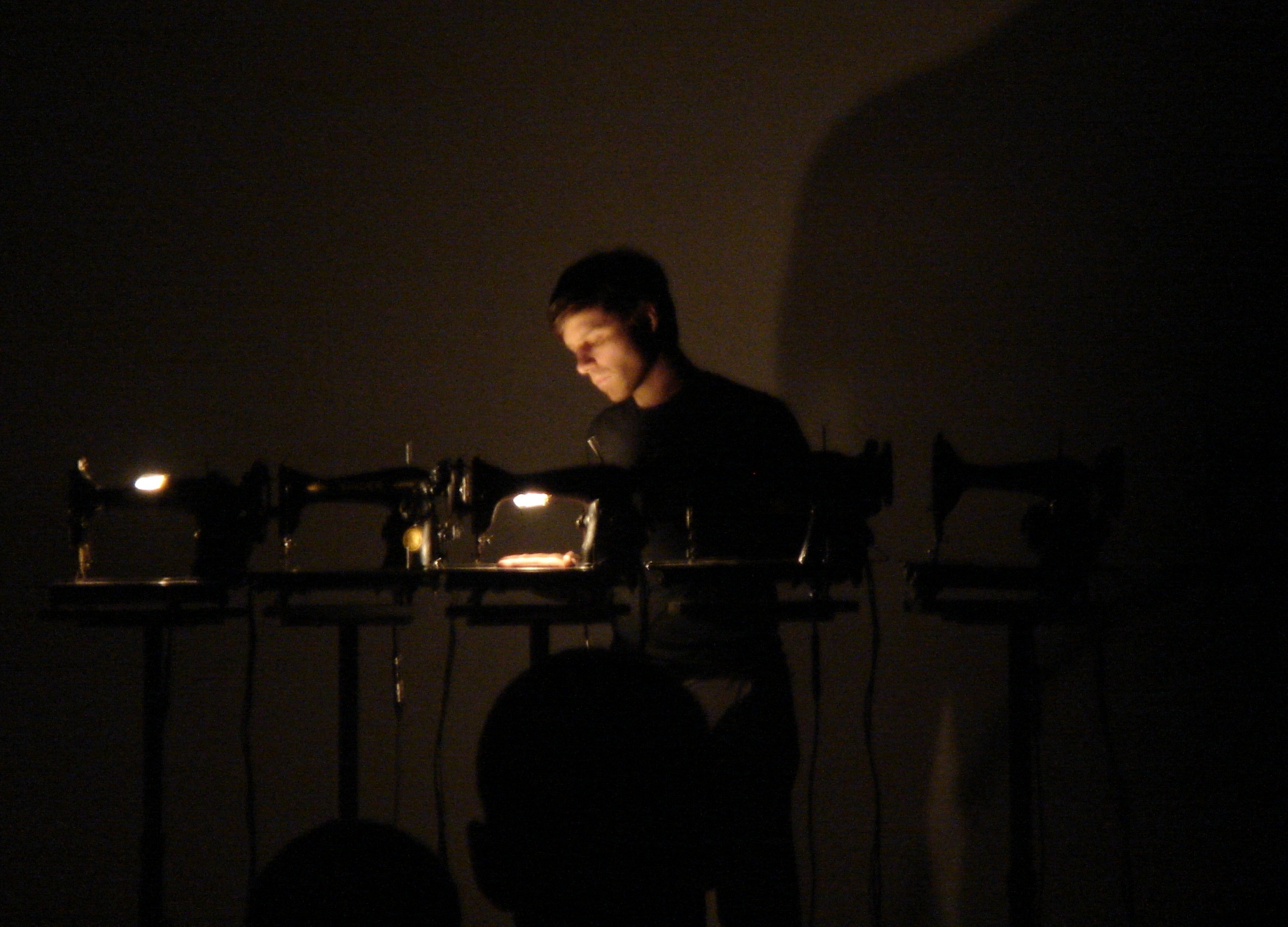


Martin Messier Sewing Machine Orchestra


Other performers at Elektra 12 provided examples of different ways to convey liveness in performance. Louis-Philippe Demers, Armin Purkrabek and Phillip Schulze’s can-can dancing robots were mechanized stand-ins for human performers. Martin Messier’s work Sewing Machine Orchestra was performed by a bank of computer controlled 1940s Singer sewing machines. (Interestingly, Messier admits his presence on stage is redundant, although he still does it.) Others incorporated elements of traditional performance: staging, movement and props. For instance, 1024 Architecture, who’s highly entertaining performance Euphorie, used layers of translucent screens to catch their projections and performed with customized controllers (think light-saber guitar solos). Then there is always the possibility of using actors. Daredroid was performed by a woman (not devised by a woman) wearing a costume that turned her into a drink dispensing machine with legs and breasts. This is no game substituted living avatars into a first-person shooter style gaming system. In the end I am just more willing to read these works as live than the laptop solos that dominated Elektra 12 performance series. Perhaps we will get a more balanced diversity of performances and performers with Elektra’s biennial expansion, planned for 2012.


_________________________________


For more from Philip Auslander about the evolution of the concept of liveness see:www.vimeo.com/20473967


For more about live coding watch: http://vimeo.com/20241649 or visit: www.toplap.org


For a review of 1024 Architecture’s Euphorie at Elektra 12 see:http://createdigitalmusic.com/2011/05/with-neon-guitars-and-immersive-projection-1024-architecture-become-audiovisual-rock-band/


- With special thanks to Tasman Richardson for his insight into live AV performance.


Published: Artengine and Vague Terrain 11 June 2011 http://artengine.ca/blog/?p=2341

Elektra 12: Playing with your senses


The Elektra 12 festival, presented in Montreal from 4 to 8 May 2011, followed a similar pattern to previous years. During the day was the “international marketplace”: a series of short presentations by artists and administrative types talking about their work. In the late afternoon were openings of exhibitions dotted around town. Then from 9pm there were performances at the theatre Usine C. I want to unpack the screen-based AV performances in a later post, but for now I am going to focus on two works that perform beyond the projecton screen and the speaker.


The best thing that Elektra had to offer was Kurt Hentschlager’s FEED—and they know it. It ran almost every night, sometimes twice in one night, and has been shown at five previous Elektra festivals. It is a work in two halves and the second half completely overshadows the first. So much so that until I came to write this I had almost forgotten about the first part: a projection of a featureless computer generated male body floating and replicating in a black void. Except for serving as a warning of how we might soon feel, I saw no real connection between this projection and what followed. And what followed was awesome.


I will never capture the experience in words. Every person I spoke to had a different impression. Before going in we all had to sign waiver forms acknowledging that we had read the warnings about how overwhelming the experience could be. No wonder the projection was so forgettable, we were all sitting there waiting for the pandemonium to begin. It was well worth the wait.


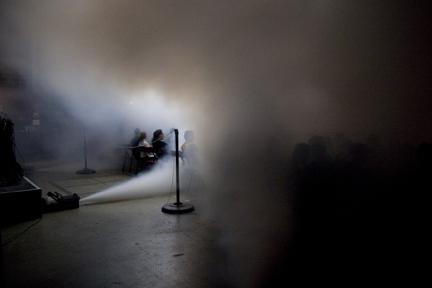
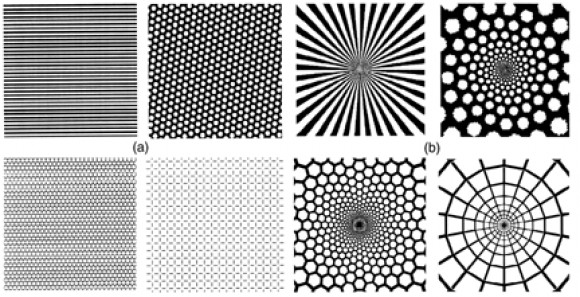
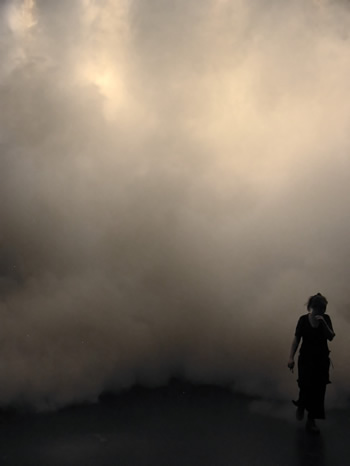
Theatrical fog flooded the room. I immediately began to assume that we are going to see something akin to a 1960‘s Expanded Cinema event, maybe with lasers if we were lucky. But the fog got so thick that the possibility of seeing anything was quickly ruled out. I couldn’t see my hand when it was right in front of my face nor could I tell if my eyes were open or closed. A strobe started up with accompanying pulsating sounds, and then the magic began. Rainbow colored vortexes and shimmering diagonal grids appeared, not in-front but inside my eyes. It was like an sober psychedelic experience. The scientists call these visions phosphenes. They are formed between the retina, as it is bombarded by light, and the visual cortex, as it strains to see something in the fog. You can approximate the FEED experience by pressing on your eyes or, of course, by taking hallucinogenics. Although it is more like the latter because you can always stop pressing your eyes at any moment and release yourself from the sensation. You can’t escape Feed. It is engulfing and can become quite claustrophobic.


Typical phosphene forms


At a few stages I had the urge to get up and move around, to feel untethered from three dimensional space like the faceless man in the prelude. Undoubtedly, that would be a heath and safety disaster. The bureaucratic mindset that had us signing liability release forms wouldn’t want us crashing into, vomiting over, or passing out on each other.


When the strobes began I was quite relaxed; the rhythm created through light and sound was temperate. With hindsight, Hentschlager was just easing us into it. The intensity heightened. He is obviously aware of, and manipulating, a correlation between the frequencies he could generate and naturally occurring frequencies in the human body like heart beats and brain waves. Hentschalger was playing our senses like they were dials on a synthesizer.


Previous discussions of FEED, which has been shown around the world, talk about it as fusing the human and machine providing a vision of our cyborg future. I can’t help but channel Lev Manovich and Donna Harraway here and argue that Feed also provides a vision of our cyborg past and present. Renaissance perspectival machines harnessed and manipulated the properties of binocular vision. Cinema (and its various Victorian fairground precursors) works because our brains see movement when shown rapidly succeeding images. To be quite literal about it, all technology is just that – an extension and enhancement of human capabilities. We have been and always will be cyborgs.


Another Elektra work that operates on sensory deprivation and manipulation was Just Noticeable Difference (JND) by Chris Slater. Only one person can experience it at a time and I was one of the fortunate few. You crawl into a pitch black cube and lie down, as instructed, on your back. In the beginning I couldn’t work out if the faint buzzing in my ears was just tinnitus, induced by the night’s performances, or the work. I waited patiently. Then my stomach grumbled – or at least it felt like it did. Then my foot began to twitch and my breathing became bronchial. In sensory deprivation chambers it is common to become more aware of the sounds and movements of your body, so I wasn’t sure of the origin of these sensations.


Although, quickly the just noticeable difference became a very noticeable difference. I almost screamed. There was a tapping on my shoulder from underneath me and the ceiling of the space lit up with flashes of red. The space began to feel more like a coffin. Then came the thunder and lightning – a deep rumble with flashes of light from above. As the storm subsided I was turned into a human drum. The floor had morphed into something like a robotic massage chair switched to the ‘karate chop’ setting. The effect was no longer subtle. In the end it was more like being on a carnival ride.


My comparison with fairground experiences is not flippant. Fairgrounds and amusement parks were the sites where modern technologies of grand scale and spectacle were made available for the public to physically experience. They were theaters of machines; both generating technological wonders and reflecting the pervasive techno-culture. Their decline has left a gap. Where do we go now experience technologies beyond the cinematic? Where do we go to confront, externalize, escape and make sense of our media dominated habitat? I am not the first to suggest that contemporary art, museums, international art biennials and fairs have slipped into this terrain and become increasingly spectacular.


In the face of this, contemporary art criticism is scathing of the spectacular. Any display of impressive and enjoyable technology is seen as dangerous, homogenizing, distracting, isolating and pacifying. Critics invoke Guy Debord’s Society of the Spectacle and Baudrillard’s Simulacrum and Simulation to express a suspicion of sensational affects. Any artwork using spectacular means and any viewer enjoying it are framed as critically unaware, or worse still complicit.


I am weary of criticism that assumes I and other viewers are easy dupes. Just because we sit passively, willingly absorbing, does not mean that our minds are not active. As Jacques Rancière argues “spectatorship is not a passivity that must be turned into activity. It is our normal situation. We learn and teach, we act and know, as spectators who link what they see with what they have seen and told, done and dreamed.” Through our interpretations we all actively construct meaning and knowledge. Then by communication with others we can transform the way a work of art is seen. Feed and JNDdefinitely give us plenty to interpret. They offer experiences that we couldn’t otherwise know; an aestheticisation of senses and modes of perception beyond the dominant modes.


However, these works cannot elude the valid criticisms that, despite their content, spectacular works are in themselves spectacles of capital investment. They require a luxury of time, resources, funding and space to produce them. In their desirability and marketability they also marginalize less spectacular works, consuming everything from sponsorship to attention. Still highly contested, delving into these works is a roller-coaster ride of highs and lows.


______________________________


Here is a video that tries to capture Feed – but the camera doesn’t have a retina or visual cortex, so can’t really convey the experience: http://vimeo.com/403872


Texts by Lev Manovich’s can be accessed here: http://manovich.net/articles/


Donna Haraway’s Cyborg Manifesto, 1991 is here:http://www.stanford.edu/dept/HPS/Haraway/CyborgManifesto.html


Jacques Rancière ‘The Emancipated Spectator’ ArtForum, March, 2007http://findarticles.com/p/articles/mi_m0268/is_7_45/ai_n24354915/


For more on the debate surrounding the spectaclular in contemporary art see: Rethinking Spectacle 31 March 2007 http://channel.tate.org.uk/channel